
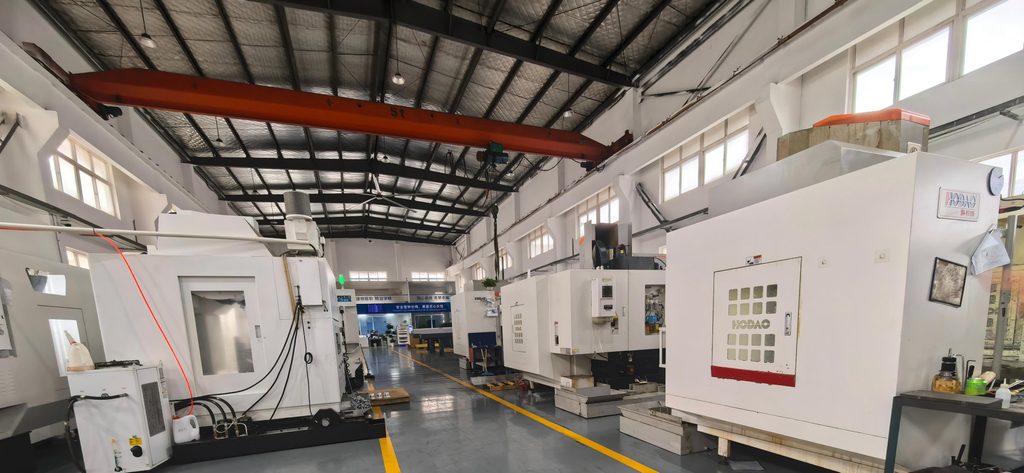
The precision machining industry is in a critical period of transformation and upgrading, with both challenges and opportunities. Combined with the current industry status and trends, its top 10 most concerning issues can be summarized as follows:
Technology & Equipment
- “Chokepoint” risks in core technologies and high-end equipment: This is the most severe challenge facing the industry. High-end equipment (especially 5-axis simultaneous CNC machine tools) and core functional components (such as spindles, bearings, CNC systems) still rely heavily on imports, which not only brings long delivery cycles and no pricing power, but also faces the risk of full-scale blockades in special periods. Meanwhile, domestic enterprises still have shortcomings in cutting data standards, core industrial software and other fields.
- High equipment cost and complex maintenance: The huge initial investment in equipment is the primary barrier for small and medium-sized enterprises. In addition, high-end equipment features complex and costly maintenance, and delivery delays of critical spare parts (such as spindles) will severely disrupt production. How to reduce the total cost of equipment over its full lifecycle is a widely concerned focus across the industry.
Talent & Workforce
- Severe shortage of skilled technical workers: There is a widespread industry consensus that experienced programmers, machine setup technicians and interdisciplinary talents are in short supply. As the older generation of skilled workers retires, the talent gap crisis is intensifying. How to attract and cultivate a new generation of technical talents is the key to the sustainable development of the industry.
- Conflict between experience inheritance and digital transformation: The industry has long relied on the experience of “senior technicians” for production scheduling and machine adjustment. During the transition to automation and intelligence, it has become a practical challenge to convert valuable personal experience into reusable data and standards, and help senior employees adapt to new systems.
Market & Competition
- Overcapacity and homogeneous price wars: Low-end production capacity is overflowing, trapping enterprises in a vicious cycle of “low-price order taking – shrinking profit – stagnant R&D”. Statistics show that the average industry quotation once dropped by 27% year-on-year in order to compete for orders. How to get rid of price wars and achieve differentiated competition is a survival test for all enterprises.
- “Multi-variety, small-batch” orders have become the norm: Market demand is increasingly fragmented. Enterprises often have hundreds of product categories, while the volume of a single order may only be a few pieces. Meanwhile, the proportion of urgent rush orders can reach 20%-30%, posing a huge challenge to traditional mass production and scheduling modes.
Production & Management
- Unplanned downtime and tool management: In automated production, a sudden tool breakage may shut down the entire production line for hours, becoming the “No.1 profit killer” of factories. How to reduce downtime through predictive maintenance and intelligent tool management is the core to improve efficiency.
- Difficulty in guaranteeing accuracy and quality consistency: The industry’s accuracy requirements have reached the micron or even nanometer level. However, micro-deformation easily occurs in complex machining (such as corner transition); issues like machine tool accuracy retention and thermal deformation control also seriously undermine the consistency of mass production.
- Low efficiency of traditional management modes: Many enterprises still rely on manual production scheduling, which is not only inefficient and error-prone, but also leads to unbalanced equipment utilization (high-precision machines overloaded while ordinary ones idle) and low on-time delivery rate (some enterprises even have a rate below 70%), severely restricting overall operational efficiency.
- Supply chain stability and geopolitical risks: Global supply chain uncertainties such as tariffs and trade frictions have a huge impact on the precision machining industry that relies on imported equipment and materials. How to build a safe and stable supply chain is a strategic issue the industry must face directly.
These challenges are not only pressures, but also driving forces for industry reshuffling and upgrading. Facing pain points such as “chokepoint” core equipment, technical talent shortage and extensive production management, local enterprises represented by Zhongtuo Precision, by focusing on core technologies including 5-axis CNC machining and committed to providing solutions from process optimization to intelligent manufacturing, are demonstrating strong development potential. In the future, enterprises that can systematically address these challenges are expected to stand out in the fierce market competition.